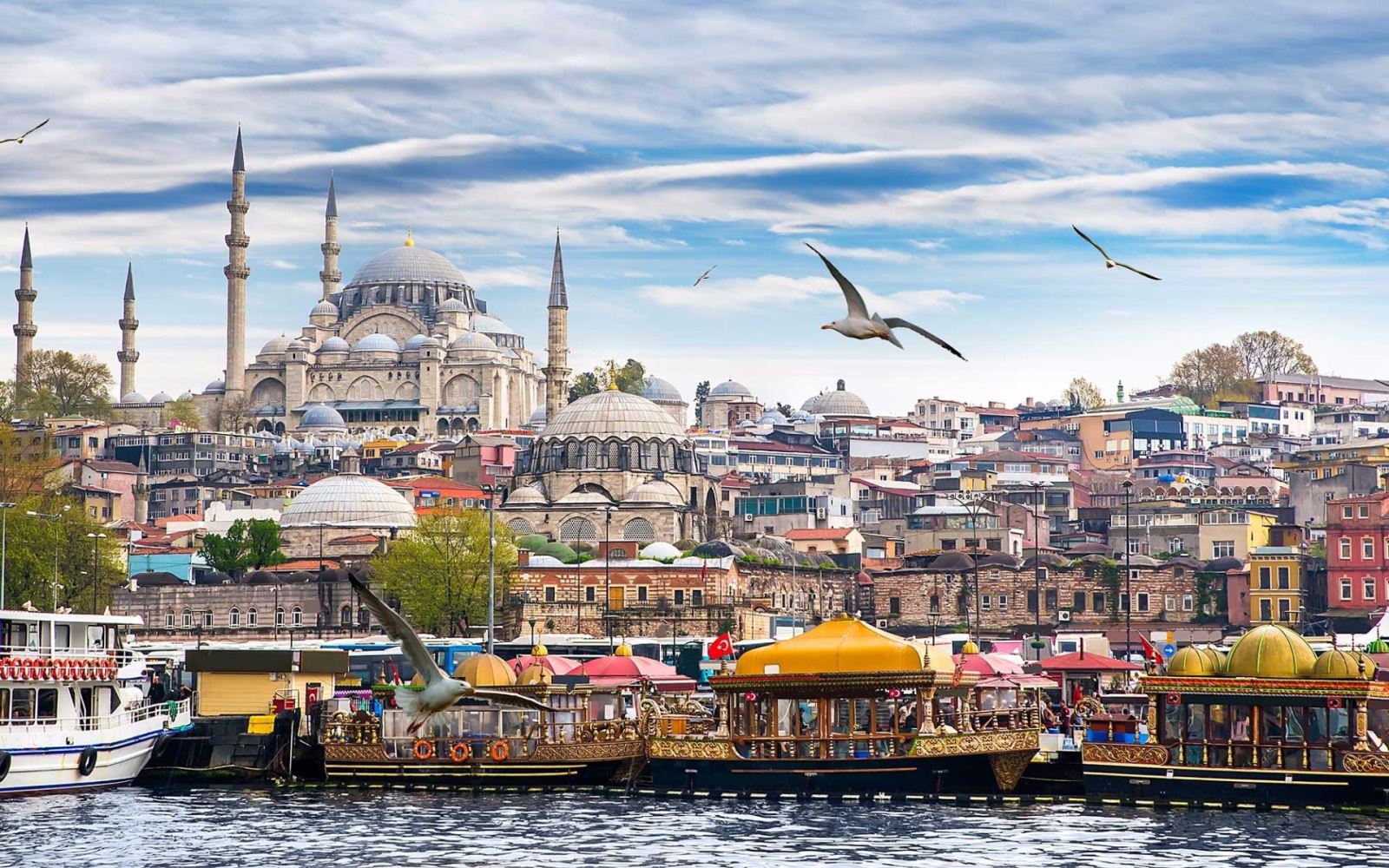
The Chief Architect Of The Ottoman Empire Ali Ajami Tabrizi (?-date of death 1539)

The Chief Architect Of The Ottoman Empire Ali Ajami Tabrizi (?-date of death 1539)

Bilal DEDEYEV   - Tofiq NAJAFLİ - Ramazan USLU- 2014


Özet
Altough his name is Alâeddin Ali Bey b. Abdülkerim, he has known as Acem Ali or Esir Ali in Ottoman Empire. After the victory of Çaldıran war (1514), Sultan Selim brought nearly 3.000 artist to his empire from the Tabriz city that conquered by ottoman forces. Acem Ali ,known as the ‘Master of Masters’ in the state of Safavid, was one of the artists brought to empire. He has been sent to İstanbul from Amasya in 12 Nisan 1515 by Sultan Selim and was promoted as the chief of architects in 1519. Acem Ali, by combining classic Ottoman architecture and Persian architecture managed to built works named as "public plan" that was widely used (only used in some parts of two mosques before). Same method has been enhanced and used by Mimar Sinan (1489-1588). For this reason, Mustafa Pasha Mosque in Gebze ,Çoban Ibrahim Pasha Palace in Sultanahmet in Istanbul, supposed to be built by Mimar Sinan despite only repaired and modificated. Furthermore, many structures without inscriptions are supposed to belong Acem Ali with their stylistic and architectural properties. Some major works which are known as stated; Gazi Hüsrev Bey Complex in Sarajevo, Seyfeddin Kadi in Sofia, Sultan in Manisa, Hatuniye in Trabzon, Sultan Selim in Konya, Süleymaniye Ayas Paşa in Çorlu,Tekirdağ, Bali Paşa in Fatih,Istanbul, Cezeri Kasımin Eyüp , Piri Mehmed Paşa mosques in Silivri and Sütlüce and Bâbü's-Selam in the Topkapi Palace. During the period of Sultan Selim I and Kanuni Sultan Süleyman (1520-1566) Tebrizli Acem Ali went on to serve as chief of architects and he has passed away in 1539. After his death, Miman Sinan took over his responsibility . 


Keywords
Azerbaycan, Tebrizli Acem Ali, Mimar Acem Camii, Mimar Sinan

I Love Istanbul : Here Are 4 Reasons Why

I Love Istanbul : Here Are 4 Reasons Why

Istanbul has for a long time, been the heart and soul of Turkey. Boasting of more than 14 million official residents, the city is the only one in the world that spans two continents; Europe and Asia. I love Istanbul and admit to a major addiction for this characteristic destination.

Occasionally I meet people who wrongly assume that Istanbul is the capital of Turkey but even though it isn’t, it is still an important business hub and the number-one tourist destination of Turkey. In 2014, it beat the likes of Rome and Milan to become a top city-break destination of the world.

Some people return time and time again for a leisurely break while others admire the city so much, they buy homes there, and it now has a large expat community comprised of many nationalities. Whether people fall into the category of tourist, business traveller or expat resident, we all have one thing in common and that is we say with pride, “I love Istanbul.”


Why I love Istanbul

Food, Food, Food!

On my last visit to Istanbul, I ran into the KFC restaurant, eager to sample the world-renowned chicken that my taste buds had missed dearly. I also tasted sushi for the first time, and the local recommended street food called the Taksim Wet Burger.

The latter did not impress me even though a Trip Advisor reviewer famously labelled it a “Drunk’s Best Friend” but my diet for that week proves eating out in Istanbul is all about diversity.

From the humble baked potato to the fish restaurants of Ortakoy to the highly overpriced gourmet establishments, you can have what you want!

In Istanbul, when thinking about food, there is no need to comprise on taste.

Historical and Rich Timeline

I am fascinated by the history of Turkey and since Istanbul was formerly Constantinople, the capital of both the Byzantine and Ottoman empires, it is perfect for history buffs.

The old part of the city is a UNESCO World heritage site.There are hundreds of museums and touring Ottoman palaces like Dolmabahce explains perfectly why the Ottoman Empire was disbanded, called the sick man of Europe and left for broke.

The Blue Mosque of 1616 portrays the brilliance of architect Sedefkar Mehmed Agha, who was a pupil of Mimar Sinan, the most respected architect of the Ottoman period, while the Hagia Sophia, previously a church, mosque and now museum, perfectly combines significant artifacts of two of the world’s biggest religions.

The list of historical landmarks goes on and on.

The Bosphorus

Major wars have been fought and many men have died for control of this strategic strait of water. The Byzantine Empire seriously neglected its importance, therefore helping the Ottoman Sultan Mehmed to take control of Constantinople and ultimately finish their reign.

In turn, the Ottoman Empire formed a fashion trend for the rich and fabulously wealthy to own summer houses (yalis) on the shores.These days, life is much quieter and the Bosphorus neighbourhoods can be explored on foot but I prefer cruising.

Whether it is a short 2 hour tour or a day’s trip to the mouth of the Black sea, Bosphorus cruises are normally on every list of the top “Things to Do in Istanbul”

The owners and managers of Zoe Yacht, a 55 feet motorboat that is available for private charter cruises report that in recent years, interest in Bosphorus cruises has increased not only with foreign tourists but also Turkish customers.

The boat  goes out every day for 2 hour cruises and sunset tours, but lately, the owners are receiving more enquiries for special events and occasions like marriage proposals, weddings and birthdays.

Repeat visitors to Istanbul are generally opting for the Princess Islands tour which includes swimming stops and visit to the group of Islands with its magnificent old Ottoman mansions.

Cruise ship visitors often gather a large crowd and hire their own boat so they have privacy at lower costs, while businesses are hosting more dinners and events on the water, rather than off it.

Life on the shores of the Bosphorus has and always will be a pivotal point of Istanbul’s characteristic appearance.

Has the old Ottoman trend for Bosphorus living seen a revival? 

Downhill from the popular Taksim area, are the small neighbourhoods of Karakoy and Beyoglu. Within these areas, I particularly love the famous Genoese Galata tower, with its stunning panoramic view from the top, but anyone with a fear of heights will be immensely disturbed by the lack of crowd control, dodgy safety bars and the view of a 63 metre drop.

The streets are lined with boutique hotels, Jewish synagogues, the Jewish museum, quirky shops, the Istanbul modern art museum and we also found a small wine tasting shop, which delighted my alcoholic friends but head further downhill to reach Galata Bridge, famous for its fishermen and floating fish boats.

In a restaurant underneath the bridge, a 16 year-old waiter offended us with his corny attempts to bait himself a sugar mommy.

Our refusal may have resulted in an overpriced bill consisting of dishes that we never consumed but my point is, stay away from underneath the bridge and enjoy the vibes on top of it.

How to say “I love Istanbul” in Turkish?

Istanbul’u seviyorum

Say that and the locals will love you back!

Conquest history of Istanbul, causes and results

May 29 Conquest history of Istanbul, causes and results

The Ottoman Sultan who started on April 6 – May 29, 1453. Our heroic units under the command of Medmed, the capital of the Byzantine Empire, congratulate the turn of the 565th anniversary as of today, 29 May may be the official holiday, May 29 schools will be closed, short information about May 29, the conquest of Istanbul, conquest of Istanbul reasons and results of conquest of Istanbul are sought in curiosity. Sultan Mehmed the Conqueror, on April 5, 1453, with his navy, stepped into Istanbul. The last land in the hands of the Byzantine Empire, the city walls of Istanbul, could not be overcome, was spoken all over the world. The Ottoman army against the Byzantine army, which had 9 thousand soldiers, had five thousand coins, was spoken of between 100 thousand and 500 thousand. The Ottoman Empire, which has the most modern weapons in its possession, overcomes the walls that are called "inexcusable" in the command of Fatih, which is the praise of the Prophet's master Aleyhisselâm; He turned off a circuit and opened a circuit. Here is what you seek about conquest of Istanbul …

ادامه نوشته

What Americans Need to Know About Travel to Turkey

From newyork times

What Americans Need to Know About Travel to Turkey

Governments in both Turkey and the United States abruptly suspended visitor visas between the two countries on Sunday. The actions were the latest in increasing tensions between Turkey and the United States, which stem from the failed coup attempt against President Recep Tayyip Erdogan, and the criticism from the United States and its Western allies over his increasingly authoritarian methods.

The tensions boiled over on Sunday, when Turkey arrested a local employee of the American consulate in Istanbul, accusing the employee of being a follower of the cleric Fethullah Gulen, an opponent of the president who lives in self-imposed exile in Pennsylvania.

What exactly do these visa suspensions mean for travelers from the United States who may be interested in visiting Turkey or if they already have a trip planned to the country?

Here, answers to questions about travel to turkey.

If I live in the United States, can I still visit Turkey?

It depends, said Aydan Karamanoglu, a spokesman for the Turkish Embassy in Washington D.C. “Right now, it is impossible for U.S. residents to come to Turkey if they need a visa and are applying for it in person because it is not possible to apply for a visa in person,” he said.

Those who already have Turkish visas, however, can still visit Turkey, he said.

Turkey also grants e-Visas, which allows travelers to obtain visas by applying online through evisa.gov.tr, but only citizens of some countries are eligible to apply for these e-Visas. U.S. citizens are not eligible, and therefore, citizens who live in the United States are currently unable to visit Turkey.

You have 4 free articles remaining.

Citizens of countries such as Norway, Australia and India, on the other hand, are eligible to apply for e-Visas to visit Turkey (evisa.gov.tr has a list of all eligible countries) and can do so if they live in the United States.

Can I visit Turkey if I am a citizen of the United States and live abroad?

It’s possible but not guaranteed. You will need to apply for a visa and can do so by visiting your local Turkish embassy or consulate, Mr. Karamanoglu said.

I have a trip to Turkey booked, and now I’m ineligible to apply for the Turkish visa I need to take that trip. What should I do?

Misty Belles, the director of global public relations for Virtuoso, a luxury travel network, said that travelers who have booked their trip with one of the network’s more than 16,000 advisers should be assured that this adviser will be their advocate in trying to obtain a refund. “In unforeseen circumstances, such as this one, it’s an adviser’s job to liaise with your hotels, airline and ground tour operators to help you get your money back, but a refund isn’t a guarantee,” she said.

The tour operator Intrepid Travel runs 16 trips a year to Turkey, and according to Michael Sadowski, a spokesman for the company, any American travelers booked on coming trips who are affected by the visa suspension will be issued full refunds or can use their deposit toward another tour.

On Monday, Turkish Airlines announced a refund policy for ticketholders who are affected by the visa suspension. Passengers holding Turkish passports flying to the United States, and passengers holding United States passports flying to Turkey on Turkish Airlines and AnadoluJet between Oct. 9 and Oct. 31, with tickets issued on or before Oct. 9, can make reservation changes free of charge or get refunds on unused tickets; the airline will carry out these changes and refunds until Oct. 31.

Why did the United States and Turkey suddenly suspend visitor visas between the two countries?

On Sunday, the U.S. Embassy in Ankara, Turkey’s capital, announced that it was suspending nonimmigrant visa services in Turkey. The move meant that Turkish citizens would no longer be allowed to apply for a visa in Turkey to visit the United States. However, they can still apply for one at a United States embassy or consulate in another country.

Later that day, Turkey suspended its nonimmigrant visa services in the United States. “We have applied this measure because we have been subject to the same measure from the U.S.,” Mr. Karamanoğlu said.

On Monday, the United States Ambassador in Turkey, John Bass, issued a statement saying that the arrest of a Turkish staff member by Turkish authorities was the primary reason the embassy suspended its nonimmigrant visa services. It was the second such arrest this year, Mr. Bass said. “Despite our best efforts to learn the reasons for this arrest, we have been unable to determine why it occurred or what, if any, evidence exists against the employee,” he said.

How long are the visa suspensions expected to last?

In his statement, Mr. Bass said that he hopes that the visa suspension won’t last long. “The duration will be a function of ongoing discussions between our two governments about the reasons for the detention of our local staff members and the Turkish Government’s commitment to protecting our facilities and our personnel here in Turkey,” he said.

ADVERTISEMENT

Mr. Karamanoglu said that the duration of Turkey’s visa suspension depends on the United States. “If the U.S. government revokes its measure, we will revoke ours,” he said.

Is it safe to visit Turkey?

The U.S. Department of State has a warning on its site, which was updated on Sept. 28, about visiting Turkey because of the continuing threat of terrorism in the country. “We recommend U.S. citizens carefully consider the need to travel to Turkey at this time, and avoid travel to southeast Turkey,” the warning says. This warning was initially issued following the string of terrorist attacks in the country over the last two years, including one last June at Istanbul Ataturk Airport, which killed dozens of people and wounded more than 200. In fact, the number of visitors from the United States to Turkey has dropped in the last year: according to the Turkish Culture and Tourism Office in New York City, around 459,500 people from the United States traveled to Turkey in 2016; in 2015, however, that number was around 798,800 travelers.

But although Turkey does have a continued threat of terrorism, it shouldn’t be an off-limits destination, said Jim Duck, a senior intelligence analyst for iJet International, a travel intelligence firm based in Annapolis, Md. “If you already have a visa or are otherwise eligible to visit Turkey, the country is largely safe and poses no greater risk than travel to many other parts of the world,” he said. However, Mr. Duck added that Turkey’s southeastern provinces, especially those along the Turkey-Syria border, should be avoided because of significant security concerns.

10 of the best books set in Istanbul

10 of the best books set in Istanbul

Malcolm Burgess picks 10 literary tributes to Istanbul, from a history of Constantinople to a literary trail through the city by Nobel Prize-winner Orhan Pamuk 

• As featured in our Istanbul city guide

Malcolm Burgess

 Strolling through Istanbul: A Guide to the City, and the Galata Bridge. Image: Massimo Borchi/ Atlantide Phototravel/Corbis

Hilary Sumner-Boyd and John Freely, Strolling through Istanbul: A Guide to the City, 1972

Perhaps the definitive guide to Istanbul. Detailed but never boring, we stroll through Istanbul in the company of the best-informed and most engaging of guides who clearly love the city themselves.

"So the visitor is advised to stroll to the Galata Bridge for his first view of the city. But you should do your sight-seeing there as do the Stamboullus, seated at a teahouse or a café on the lower level of the Bridge … looking out along the Golden Horn to where it meets the Bosphoros and the Sea of Marmara." 
• Galata Bridge

Edmondo de Amicis, Constantinople, 1878

 Constantinople

One of the most enjoyable accounts of the city ever written, full of teeming life and startling contrasts. Yes, times have changed since 1877, but this complex and vibrant portrait of the city remains recognisable.

"One of the most splendid bazaars is for shoes … The walls are stacked with slippers; in velvet, in leather, in brocade, in satin, in the most startling colours and the oddest shapes, embroidered with filigree, glittering with sequins, decorated with swansdown and silk tassels, starred with flowers in gold and silver"
 The Grand Bazaar

Yaşhar Kemal, The Birds Have Also Gone, 1978

 The Birds Have Also Gone

A short, beautiful novel from one of Turkey's best-loved writers and lovingly translated by his wife, it centres on the idea of gaining grace through kindness to all living things by the old practice of releasing birds captured specifically for the purpose.

"Taksim is the most populous part of the town. Wouldn't there be some, among the crowds that always throng the square, just a few with still a modicum of humanity who, for a trifling sum, will take pride and joy in setting little birds free. Such a sight it is when those birds soar joyously up into the sky …" 
• Taksim Square

Orhan Pamuk, Istanbul, 2003

 Istanbul. Memories of a City

The Nobel Prize winner recalls the Istanbul of his youth. Atmospheric black-and-white photos contribute to his depiction of hüzün ― a particularly Turkish form of melancholy.

"The beauty I see in Süleymaniye Mosque is in its lines, in the elegant space beneath its dome … Even four hundred years after it was built, I can look at Süleymaniye and see a mosque still standing in its entirety, just as it did, and see it as it was meant to be seen." 
• Süleymaniye Mosque

Ahmet Hamdi Tanipar, A Mind at Peace, 1949

 A Mind at Peace

Considered by Orhan Pamuk to be the greatest novel ever written about Istanbul, this is a lyrical tribute to both the city and human love.

"Çadircilar Street was bewildering as always. On the ground before a shop whose grate usually remained shuttered, waiting for who knows what, were a Russian-made samovar spigot, a doorknob, the remnants of a lady's mother-of-pearl fan so much the fashion thirty years ago, a few random parts belonging perhaps to a largish clock or gramophone …" 
• Çadircilar Street (between Beyzait Square and the Grand Bazaar)

Lady Mary Wortley Montagu, The Turkish Embassy Letters, 1837

 The Turkish Embassy Letters

Though written in the 18nth century, the lively, incredibly modern voice of Lady Mary keeps us entertained throughout.

"A palace of prodigious extent, but very irregular, the gardens a large compass of ground full of high cypress trees … the buildings all of white stone, leaded on top, with gilded turrets and spires, which look very magnificent, and indeed I believe there is no Christian king's palace half so large." 
• Topkapi Palace

Elif Shafak, The Bastard of Istanbul, 2006

 The Bastard of Istanbul

From one of Turkey's most popular writers, the bestseller that is by turns magical, informative and heart-breaking as it brings together the turbulent past and the complex present.

"The tavern was a stylish but convivial place near the Flower Passage. As soon as they sat, two waiters appeared with a cart of mezes … 'yalanci sarma, tourshi, patlijan, topik, enginar,' Armanoush started naming the dishes the waiters were leaving on the table." 
• Çiçek Pasaji, in Beyoğlu district

Philip Mansel, Constantinople: City of the World's Desire, 1453-1924, 1995

 Constantinople

A fascinating, wonderfully readable cultural, social and political history of the city in its prime. Rich with anecdotes and information, it is always astonishing and sometimes horrifying.

"Yildiz was a museum-complex and industrial park as well as a palace and government compound … The Sultan's personal photography laboratory, library and carpentry workshop revealed his favourite forms of relaxation: he was a skilled carpenter who made desks for his daughters and walking sticks for wounded soldiers." 
• Yildiz Palace and Park

Mustafa Ziyalan and Amy Spangler (editors), Istanbul Noir, 2008

 Istanbul Noir

For those fascinated by the darker side of cities, this collection of 16 stories gives some unexpected insights into the people and places – and even the weather – of Istanbul.

"In her youth, Cemile Abla used to love to walk to Bebek and get a cherry-vanilla ice-cream cone, sit on a park bench with a dog-eared Sait Faik book, and just relax. But nowadays, in front of the ice-cream stands stood long lines of bronze, blond-haired girls, pot-bellied boys, and odd, shaggy dogs …" [Excerpt from The Smell of Fish by Hikmet Hükümenoğlu] 
• Bebek

Jim Hinks and Gul Turner (editors), The Book of Istanbul: A City in Short Fiction, 2010

 The Book of Istanbul

A recent collection of newly-translated stories from 10 leading Turkish writers, each with a different take on the city. A slim volume, but full of insights and surprises.

"My steps took me to Yeldeğirmen … I started to wander through the narrow streets. Washing was drying on lines hung between opposite buildings. Sheets, stockings, underwear, shirts, black primary school aprons were hanging side by side, as if protecting the banished soul of the neighbourhood." [excerpt from The Well by Türker Armaner, translated by Ruth Whitehouse] 
• Yeldeğirmen (a district of Kadiköy)

10 Reasons Why I Fell in Love with Istanbul

10 Reasons Why I Fell in Love with Istanbul

BY LADY ANNE ABITAPR


I have this huge crush on Istanbul for years. Needless to say, it turned into a love affair when I finally got to visit a couple of months ago. And when it was time to say goodbye, just like a girl truly madly in love, I suffered from separation anxiety.

How can somebody be so crazy about a city? Before you judge, please allow me to explain. Here are 10 reasons why I fell in love with Istanbul, probably the same reasons that will finally make YOU book an Istanbul-bound flight as well.   


1. Because it is one of the few cities in the world straddling two continents

Istanbul sits in a very strategic location. It is a bustling metropolis where two continents meet. One part belongs Europe, the other to Asia, but connected together by a busy waterway known as the Bosphorus.

There was a day when Ed and I spent the morning in the touristy shopping street of Istiklal Caddesi in the European Side, then had the afternoon basking in the simplicity of Kadikoy Market in the Asian side. It was a joy experiencing both strikingly different worlds in the same day. But there was one special day when I found myself in between! We hopped in a TurYol boat and cruised in the Bosphorus Strait for two hours - a short and cheap transcontinental journey that made me fall in love with Istanbul so much more!    


2. Because there is history in every corner

Istanbul used to be the capital of three great empires - Roman, Byzantine, Ottoman. These empires left astonishing marks all over the city! There are over a dozen at Sultanahmet District alone - highlighted by The Blue Mosque, one of the most notable works of the Ottoman Era. Opposite Blue Mosque is Hagia Sophia, a basilica built by the Byzantine Emperor Justinian I and later on converted into an imperial mosque by Sultan Mehmed II. Also in the vicinity is the Serpentine Column, erected by the Roman Emperor Constantine the Great when Istanbul was the center of the Roman empire. 


Ed and I planned out an Old City DIY Walking Tour based on the major attractions we wanted to see and eventually stumbled across lesser-known historical landmarks in every turn. There are a lot of them! It was like time-traveling without leaving the present.  

The Blue Mosque


the magnificent dome of Hagia Sophia

3. Because it is legendary

Istanbul is a city of legends! It is in the Bosphorus that Jason and the Argonauts sailed when they searched for the Golden Fleece. It is in the Golden Horn that Hera passed through and gave birth to Keroessa. I was a fan of Greek Mythology back in high school, hence seeing the places I only once read in the mythology pocket book I borrowed from my cousin was surreal. 


But wait there's more! I heard there are 400 legends and 100 fairy tales behind Istanbul. No wonder why this metropolis looks mystical to me!

The Golden Horn 


4. Because it is photogenic

Ed and I are not seasoned photographers, but we do love to take photos. Istanbul is such a delight to the camera lens. It is vibrant, full of life, in all angles! We never had to search for Instagram-worthy spots as Istanbul is flawless through and through. We couldn't stop clicking at the skyline dominated by minarets, at the busy streets packed with so much character, at the waterways which are naturally blue and at the remarkable architecture that mirrors the city's rich history! 


the Old City's picturesque skyline 


the Galata Tower in the midst of a vibrant metropolis 

5. Because it is bursting with colors

Oh, Istanbul's colors! There are splashes of bright and beautiful shades everywhere, be it in the bazaars, or in a neighborhood, or in the skies! 


The Turkish lamps in technicolor in Grand Bazaar and the spices in yummy palettes in Egyptian Bazaar brought me to a halt in the crowded alleys. The pastel-toned homes in Balat and Fener had me wishing I could live in such a colorful community even just for a day. The sky that is painted with a soft yellow hue at sunrise was drenched in blue at mid-day. It was then radiantly filled with a golden glow at sunset. Witnessing the transition me feel extra-thankful to be alive in this wonderful world!

Turkish Lamps


the Ladder Street in Balat


Sunset in Istanbul #NoFilter

6. Because of my noticeably glowing skin after hammam

I love to be pampered, but honestly, I had second thoughts of getting a Turkish Bath. I have never bathed in a public bathhouse and never had someone doing something I can do for myself. But as they all say, it is a Turkish tradition not to be missed, so I shook off the negativity and gave it a go. 


I received a traditional Turkish Bath in a hammam exclusive for ladies in  Cemberlitas Hamami - a historical hammam built by the Master Architect Mimar Sinan for the Sultan's mother in 1584. The tradition involves lying on a marble in a hot room (which will make you sweat), lathering with an extra sudsy soap, and intensive scrubbing (which exfoliates the dead skin). I came out like a new person wrapped in a new soft and healthy glowing skin!  


the historical Cemberlitas Hamami


the hammam essentials: locker key and hammam cloth,  not in the photo: disposable undies and scrub  

7. Because I can master the art of haggling in the bazaars

Shopping has never been a part of our travels. Ed and I would simply purchase a few keepsakes and we're good to go. But I wouldn't deny, the bazaars in Istanbul made me feel giddy on the inside. 


The Grand Bazaar in Istanbul's Old City is a shopping haven with 60 covered streets and 5,000 shops. It is one of the largest and oldest covered markets in the world. Its labyrinth alleys are flocked by tourists and locals alike in search of best bargains. There is pretty much everything I wanted to bring home - Turkish ceramics, textile, jewelry, leather, trinkets, carpets! Prices are steep initially, so one must be ready to haggle. 


Another famous marketplace is the Spice Market also known as Egyptian Bazaar. It is smaller, less-crowded and less-touristy. As its name implies. most stalls sell spices and herbs. There are food, textile and souvenirs as well. The vendors are friendlier and the prices are cheaper compared to the Grand Bazaar, or maybe it's just me and my haggling skills.            


The Grand Bazaar


dried fruits at the Spice Market

8. Because public transportation is efficient and inexpensive

We never rode a taxi in Istanbul as there is always a bus or a train or a ferry going towards our chosen destination. From Sabiha Gocken Airport, we took the Havatas bus to Taksim, then the Funicular to Kabatas, then the Tram to Sultanahmet. I have to say, it is not the most comfortable way to get to the hotel, but we were able to save hundreds of Turkish Lira because of this little sacrifice. 


When we arrived in the city, Ed and I purchased an Istanbulkart (one card for the two of us). It is a smart card for public transportation fare payment, just like the NOL card in Dubai, Oyster card in London. 


Istanbulkart made our travels in Istanbul easy and economical. We used it to ride the train and tram all over the city, the ferry bound to the Asian side, the gondola (cable car) to Pierre Loti, the bus to Chora Church, the Tunel that connects Karakoy and Beyoglu, and even the Nostalgic Tram that runs along Istiklal Caddesi. We roughly spent 100 Turkish Lira on transportation!     


Istanbulkart reloading machine


the Nostalgic Tram in Istiklal Caddesi

9. Because of the food, the glorious Turkish Food!

I could have Turkish Food all day, everyday! It is rich, diverse and delicious; influenced by the country's multicultural interactions in the past. 


I jump-started my mornings with Kahvalti - a light yet complete Turkish breakfast. The rest of day, Ed and I not only explored places, but a variety of tastes and textures as well. What we love most about Turkish Food in Istanbul is that wherever we go, be it in a stall along the street or in a posh restaurant, our palates are in for a treat! 


I have shared my 15 favorite Turkish Treats in Istanbul in this blog post: Eating My Way Around Istanbul


one of our faves: Midye Dolma from Karakoy Lokantasi


Turkish Sweets from Hafiz Mustafa 1864

10. Because Turkish hospitality made me feel at home

Ed and I initially had some reservations about interacting with the locals in Istanbul. We were so keen on avoiding the infamous scams and on (please don't laugh) being "taken". Yes, I'm talking about the movie. But as days went by, we realized how wrong we were to build an invisible wall around us. The locals in Istanbul are so warm and helpful.

Ed and I got lost several times, and there is always somebody ready to help. Language barrier is present, but they surely have ways to reach out - like tracing the walking directions in our map, writing down the bus number we need to take, or simply doing some hand gestures.     

In the restaurants, after a meal, they would offer complimentary tea and devote a little time to chat. In the train, they would smile and ask "Where are you from?". There's always a stranger wishing us a great day ahead, and yes, it made our days even better!  

best free photoes of istanbul

best photoes of istanbul

İlgili resim


İlgili resim

İlgili resim


İlgili resim


kostenlose Fotos von Istanbul ile ilgili görsel sonucu


İlgili resim

İlgili resim

伊斯坦布尔的免费照片 ile ilgili görsel sonucu

İlgili resim

زیباترین عکسهای استانبول

استانبول زیبا

the beutiful istanbul

güzel istanbul

19 THINGS YOU NEED TO DO IN ISTANBUL

19 THINGS YOU NEED TO DO IN ISTANBUL

Top 10 Things To Do in Istanbul (10)

Istanbul really is a place like no other. Spanning over two continents, the city’s exceptionally unique position is just one of the many ways Istanbul brims with juxtapositions. Although Turkey’s most-visited city exudes an eclectic modernity, the country’s deep-rooted history, culture and tradition still remains undeniably prevalent.

One minute, you can be perusing European designer handbags on the high street and the next you’ll be amongst a wild flurry of colourful rugs and insistent vendors at a marketplace. Walking down the street, you can pass by the sleek glass facade of a towering high-rise on the same stretch of road as a thousand-year-old stone wall. Even the spirituality of Istanbul comes with its contrasts. The largely Muslim city is a cornucopia of exquisite mosques, with calls to prayer filling the air at every street corner. Yet, Istanbul still remains home to one of the world’s largest cathedrals (now turned museum), the Hagia Sophia, which reflects the city’s era of Orthodox Christianity. These rich contrasts are just one of the many things that make Istanbul such a fascinating place to see!

With so much to see and do in this bustling and vibrant city, Istanbul has quickly become one of my favorite places to explore.  Without further ado, here are my top things to do in this amazing city…


PLACES TO VISIT

Top 10 Things To Do in Istanbul (16)

1. The Blue Mosque

Possibly one of the most incredible buildings I’ve ever entered, the Sultan Ahmed Mosque, or the Blue Mosque as it is commonly known, is truly a sight to behold. This grand mosque is made up of five main domes and six slender minarets and the interior has been decorated with over 20,000 handmade tiles which are coloured blue. When visiting the Blue Mosque, you are given scarves to cover your head, but I suggest dressing modestly for your visit.


Top 10 Things To Do Istanbul (105)

2. Basilica Cistern

This incredible underground cistern is unlike anything you’ve seen before. The cistern, which was originally built in 532 to bring drinking water into Istanbul, was constructed using 336 columns, mostly salvaged from ruined temples. Be sure to check out the column with a magnificent-looking Medusa head on its end.


Top 10 Things To Do in Istanbul (39)

3. Hagia Sophia

The Hagia Sophia reveals a timeline to Istanbul’s religious history. Formerly an Orthodox Cathedral from 532 to 1453, the building was then converted into a Mosque, until it became secularized in 1931 and turned into a museum. It is still technically considered to be the world’s second largest cathedral and is an awe-inspiring display of giant domes and intricate mosaics (even when half the building was covered in scaffolding)! I’d recommend booking a guided tour in advance so you can skip the queues.


Top 10 Things To Do Istanbul (57)

read more at ادامه مطلب

ادامه نوشته

14 things you might not know about Istanbul

14 things you might not know about Istanbul

By EAIE
14 things you might not know about Istanbul

This summer we are highlighting various aspects of Istanbul to better equip you for your stay during the 25th Annual EAIE Conference.  While preparing for the event, we’ve come across a great deal of interesting facts about this fascinating city that will be home to our milestone conference. All of them are bound to make your journey even more special so here’s a list of of quirky facts to add to your conference enthusiasm. 

1. Istanbul has been the capital of some of the biggest empires: Roman, Byzantine, Latin and Ottoman. It is now Turkey’s largest city with over 13 million people – more than the population of Belgium – and the second largest in the world by population within city limits. However, it’s not Turkey’s capital. Ankara has been the capital since Turkey was proclaimed a republic by Mustafa Kemal Atatürk in 1923.

2. When Roman Emperor Constantine the Great made the city the capital of the Eastern Roman Empire in 330 AD, he decided to build it on seven hills just like Rome. The city also took his name – Constantinople (“City of Constantine”) after having been called Byzantium since 660 BC. It was officially renamed Istanbul in 1930 but many still called it Constantinople. To ensure the usage of the new name, the Turkish post office didn’t deliver the mail addressed to Constantinople.

3. During the times of the Ottoman Empire, there were 1400 public toilets around the city while in the rest of Europe there were none.

4. Istanbul has the third oldest subway in the world. It was built in 1875 after the ones in London and in New York in 1863 and 1868, respectively. It is 573 meters long and it is located in the Beyoglu district.

5. British author Agatha Christie wrote her famous novel, Murder on the Orient Express at Pera Palas Hotel in Istanbul. The Orient Express train ran between Paris and Constantinople (Istanbul) from 1883 to 1977.

6. The Blue Mosque is the only mosque in the city with six minarets. Legend has it that when it was built, it had one minaret more than the Grand Mosque in Mecca (four was the common maximum at that time) and this was considered disrespectful in the Muslim world. In order to solve the issue, one more minaret had to be added to the Grand Mosque.

7. Hagia Sophia was the largest church in the world for about 900 years until Seville Cathedral was completed in 1520. It was also one of the 20 finalists for the New 7 Wonders of the World.

8. You might think that tulips originate from the Netherlands. However, the first tulips bulbs were sent from the Ottoman Empire to Vienna in 1554 and they were distributed further to Augsburg, Antwerp and Amsterdam. Afterwards they grew in popularity in the Netherlands as they proved to be able to tolerate the harsher weather conditions.

9. The four bronze horses decorating the San Marco Cathedral in Venice were taken from Istanbul (Constantinople at that time) by the crusaders in the 13th century.

10. The Grand Bazaar is the oldest and largest historical bazaar in the world with 3000 shops covering 61 streets. You would need three days to see them all.

11. Tea has become a national drink only recently. Before that it was Turkish coffee but when it became expensive and tea leaves could be grown in the Black Sea region, tea took its place. Coffee cannot be produced in Turkey because of the unfavourable climate for its production.

12. Istanbul was the European Cultural capital in 2010. Two years later it became the world’s fifth-most-popular tourist destination. Currently it’s bidding for the 2020 Summer Olympics.

13. A global city, Istanbul is one of the fastest-growing metropolitan economies in the world and accounts for more than a quarter of Turkey’s GDP.

14. And of course it’s common knowledge that Istanbul is the only city in the world to straddle two continents but still worth mentioning. The historic centre lies on the European side of the city. The Bosphorus Strait divides the city (and implicitly the two continents) and is the link between the Black Sea and the Sea of Marmara.